Beyond Visible Spots: How ‘Ghost Mold’ is Impacting Indoor Air Quality in Tampa
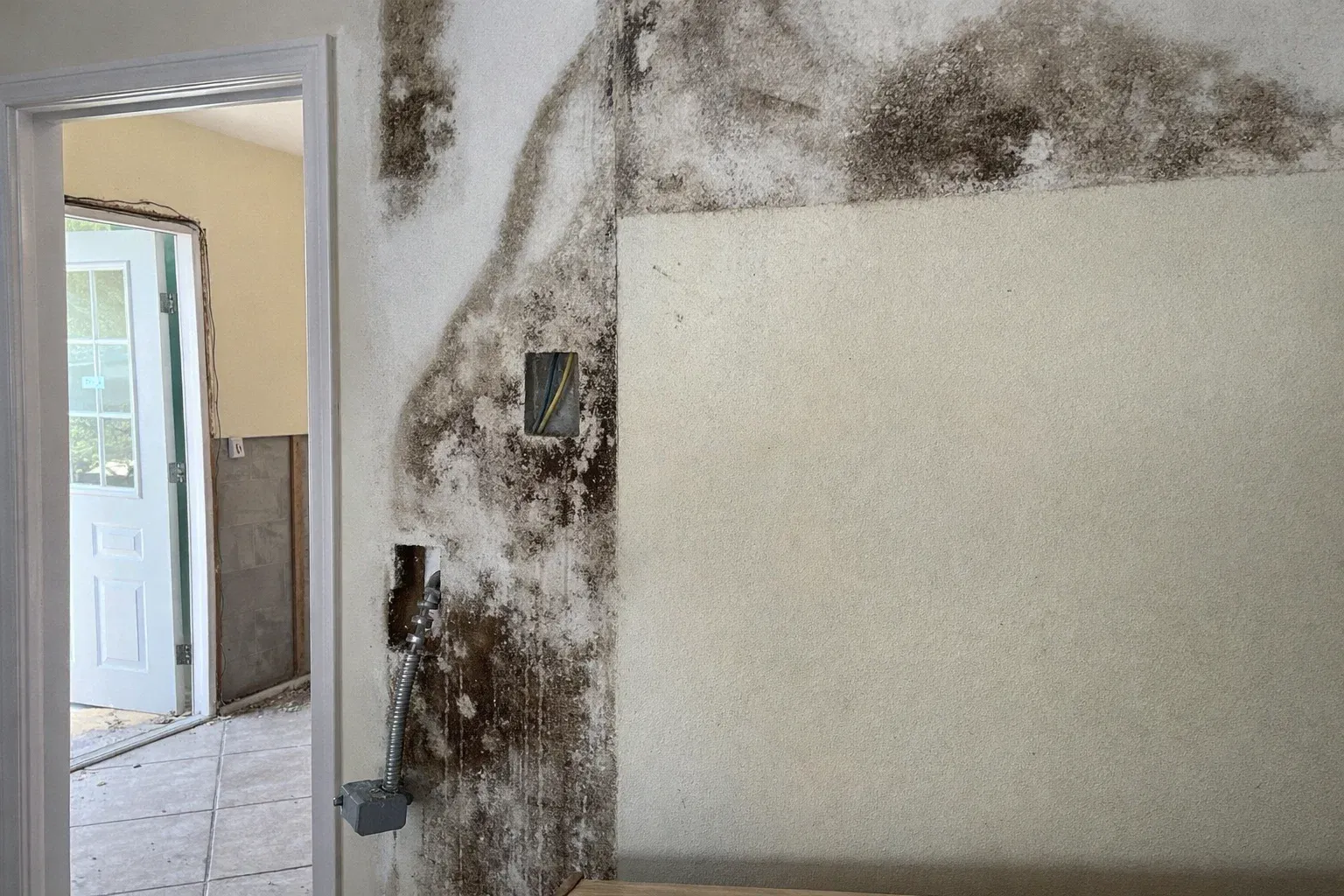
You smell something musty when the AC kicks on. You wake up with headaches that fade when you leave the house. Allergies that never went away through three antihistamines. You check every wall, every cabinet, every ceiling — no visible mold. Welcome to ghost mold: airborne mold spores from hidden colonies inside walls, HVAC ducts, and crawl spaces that never become visible until you tear into the structure. Tampa’s 75% average humidity makes our homes ground zero for this problem.
Key Takeaways
- ›Ghost mold (hidden mold) accounts for an estimated 30-40% of all mold-related health complaints with no visible source.
- ›Tampa humidity creates ideal conditions in wall cavities, HVAC ducts, and crawl spaces.
- ›Air-quality testing is the only reliable way to detect hidden mold; visual inspection misses most cases.
What Is Ghost Mold?
Ghost mold is mold growing in spaces you cannot see — inside wall cavities, behind insulation, in HVAC duct interiors, under flooring, in attic substrates, and in crawl spaces. The colony releases spores into your indoor air through wall-cavity gaps and duct returns. You breathe them. Your body reacts. But there are no visible spots to point to.
The term “ghost mold” is industry shorthand. The CDC classifies it as “hidden mold” and notes that it accounts for a significant share of indoor air quality complaints where occupants experience symptoms but no visible mold can be located.
Why Tampa Homes Are Particularly Vulnerable
High Year-Round Humidity
Tampa averages 74% relative humidity. Mold spores need 60% humidity to germinate and 70%+ to thrive. Our climate keeps wall cavities at germination thresholds for most of the year.
AC Condensation in Hidden Spaces
Cold AC ducts running through hot attics produce condensation when warm humid air contacts cool surfaces. That condensation drips into insulation and wall cavities you never see.
Stucco and Block Construction
Tampa block-and-stucco homes trap moisture between exterior walls and interior drywall. Once water penetrates the stucco coating, it has nowhere to escape and feeds hidden mold colonies for years.
Hurricane Aftermath
Even minor hurricane water intrusion creates ghost mold years later. Water that wicked into wall cavities during Hurricane Helene or Milton continues feeding hidden colonies long after the surface dried.
Symptoms That Suggest Ghost Mold
- Persistent headaches that fade when you leave home for several days.
- Sinus congestion or dry cough with no clear allergy cause.
- Fatigue and brain fog that improves on vacation.
- Asthma symptoms worsening at home.
- Skin irritation or rashes with no obvious trigger.
- Musty smell when AC kicks on — spores being pushed through vents.
Children, elderly, and immunocompromised individuals show symptoms first. If multiple household members report similar symptoms that improve away from home, ghost mold is a leading suspect.
How to Confirm: Air Quality Testing
Air-quality testing is the only reliable confirmation method. Tests sample airborne spores at multiple locations in the home, identify the species and counts, and compare against outdoor baseline.
- Cost: $300-$600 for a typical 2,000-square-foot home with 3-5 sample sites.
- Turnaround: 3-7 days for lab results.
- What to look for: Indoor spore counts higher than outdoor baseline = hidden source. Stachybotrys, Aspergillus, or Penicillium presence at any level = remediation needed.
Common Hiding Places to Inspect First
- HVAC duct interiors — most common source. Camera inspection of supply and return runs.
- Wall cavities behind plumbing fixtures — small leaks feed hidden colonies.
- Attic insulation under AC ducts — condensation drip zones.
- Crawl space subfloor — ground moisture infiltration.
- Behind kitchen cabinets against exterior walls.
Safe Removal Approach
Hidden mold removal requires professional containment. The remediation steps:
- Identify the source via air testing and selective inspection openings.
- Establish containment — plastic sheeting, negative air pressure, HEPA filtration.
- Remove contaminated materials — drywall, insulation, ducts as needed.
- Antimicrobial treatment of substrate and surrounding areas.
- Address the moisture source — without this, the mold returns within months.
- Post-remediation air testing to confirm spore counts are back to baseline.
Frequently Asked Questions
When to Call Tampa Emergency Restoration Pros
If multiple household members have unexplained symptoms that improve away from home, get an air-quality test before anything else. Tampa Emergency Restoration Pros offers free pre-test consultations and discounted testing for confirmed remediation projects.
Search “Mold Remediation Near Me” or call to schedule. Our IICRC-certified team handles testing, containment, removal, and post-remediation verification — full process under one roof.


Other Blogs You May Be Interested In


Categories